Quick Answer: Burst pipe repair means shutting off the water, finding exactly where and why the pipe split, cutting out the damaged section and replacing it with new pipe, then testing the line under full pressure before the wall or ceiling is closed up. In most Toronto homes the repair itself is a single visit. What takes longer is reaching the pipe and drying out what the water touched.
If water is coming through a ceiling or a basement wall right now, shut off the main water valve first and read the rest later. Our step-by-step emergency guide covers the first ten minutes. This article is about what happens after that: what a plumber actually does to fix a burst pipe, and what decides how big the job is.
Why Pipes Burst in Toronto Homes
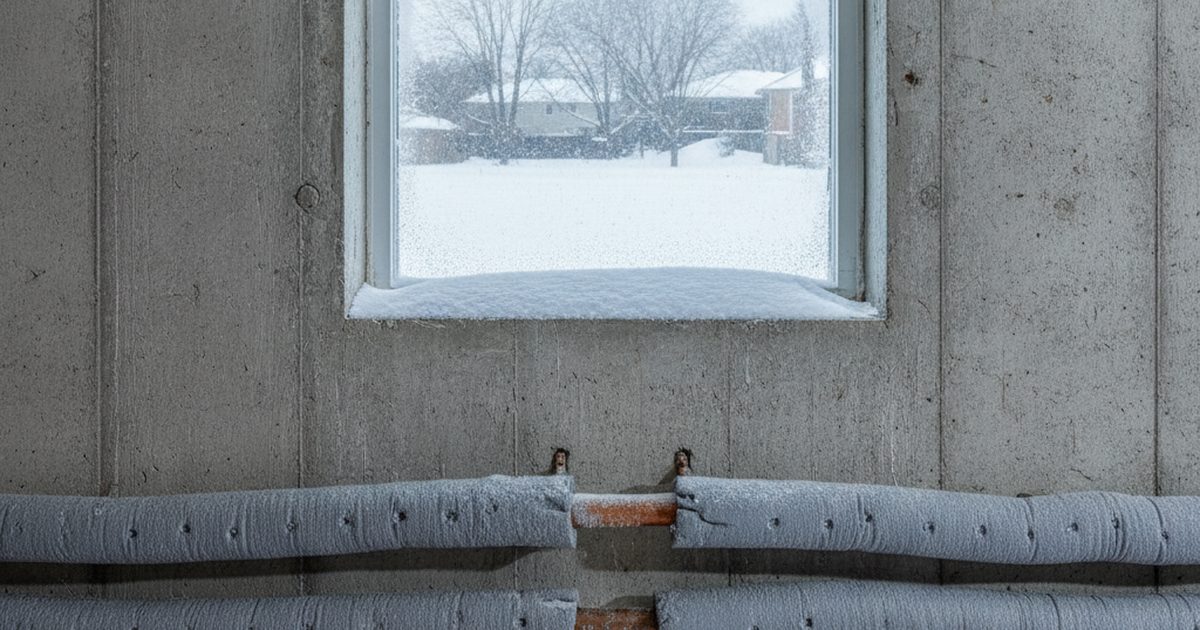
Most burst pipes we repair between November and March are freeze damage. When water freezes inside a pipe it expands, and the pressure builds between the ice and the closed tap. The pipe usually splits at that point, not where the ice is, which is why a crack can show up a metre away from the cold spot.
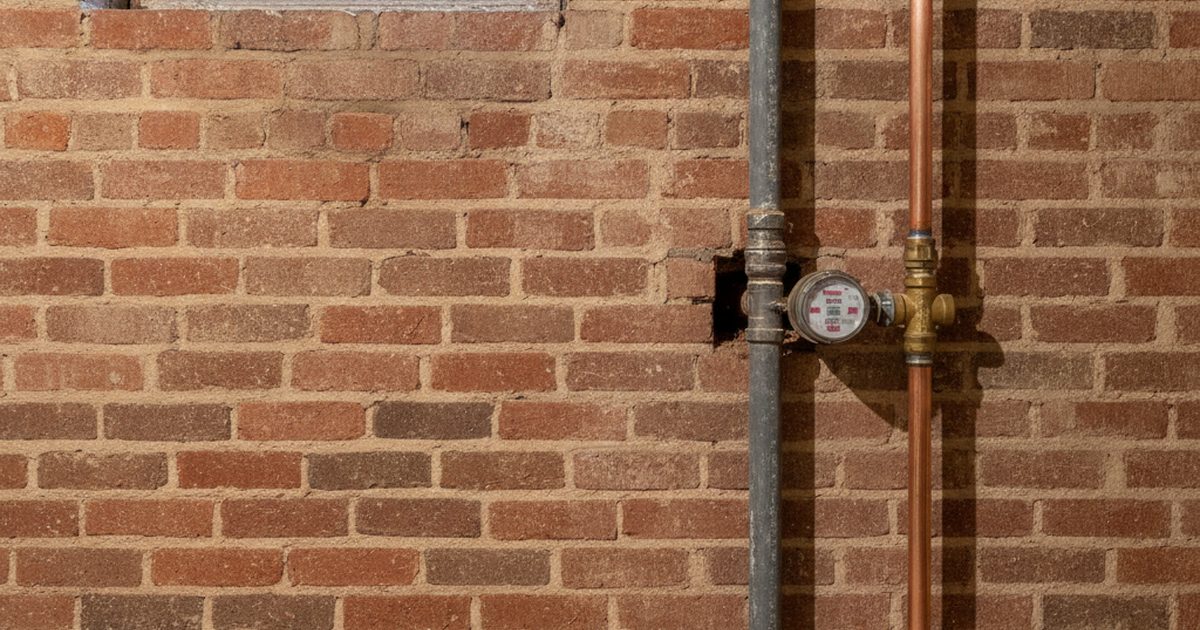
The City of Toronto's guidance on preventing and thawing frozen pipes names the likely spots: pipes along exterior walls, and where the water service pipe comes in through the foundation. It also recommends keeping areas with water pipes above 8°C, especially near the water meter. In older Toronto houses in neighbourhoods like The Annex, Leaside and Riverdale, those spots are often an uninsulated basement front wall, a crawl space under a back addition, or a pipe running to an outside tap.
Not every burst is freeze damage. We also see:
- Corroded galvanized pipe that has thinned from the inside until a section gives way
- Old copper with pinhole leaks that open up into a split
- High water pressure that strains joints and fittings over years
- Failed connectors, such as a braided supply line to a toilet or washing machine
- Pipe damaged during renovation work, a nail or screw through the wall
The cause matters because it decides the repair. A single freeze split in otherwise healthy copper is a section repair. A burst in galvanized pipe that is rusting along its whole length is a sign the rest of the line is close behind.
Step 1: Stop the Water and Make the Area Safe
The first job on any burst pipe call is confirming the water is properly off. The City notes that if a pipe has burst or may burst, you should turn off the main water supply if you can. In many older Toronto homes that valve is at the front of the basement, near the water meter, and it has not been turned in years. Some are seized or only close part way.
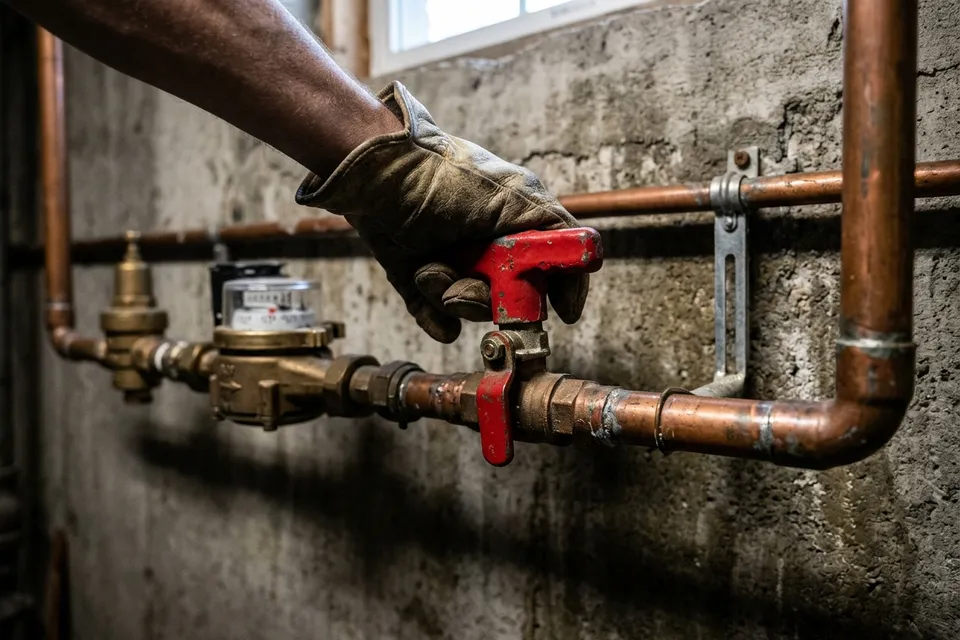
If the main valve will not close fully, that becomes part of the repair. A valve that does not shut off is a problem the next time anything leaks, so we usually recommend replacing it while the water is already off.
Water near electrical outlets, a panel or ceiling lights is a hazard. If water has reached any of them, keep clear and have the power to that area turned off before anyone works there.
Step 2: Find Exactly Where and Why the Pipe Failed
A burst pipe is not always where the water shows up. Water travels along joists and inside walls, so a wet ceiling in the kitchen can come from a pipe two metres away. We find the actual failure point before opening anything up, using moisture readings, thermal imaging and by checking the visible runs.
Then we look at the pipe on either side of the split. Is the copper thin or green with corrosion? Is the galvanized pipe rusted through at the threads? Is there another section in the same cold wall that could freeze next? This is the step that decides whether you need a small section repair or something larger, so it is worth a few extra minutes.
Step 3: Cut Out the Damaged Section and Replace It
Burst pipe repair is a replacement of the damaged section, not a patch. Clamps and tape are temporary. They are useful for holding back water until a proper repair can be done, but they should not be left inside a closed wall.
A typical repair looks like this:
- Open up access to the pipe, as small as possible but big enough to work safely and see the pipe on both sides of the damage.
- Cut out the split section plus a margin of pipe on each side, so the new joints are made on sound pipe.
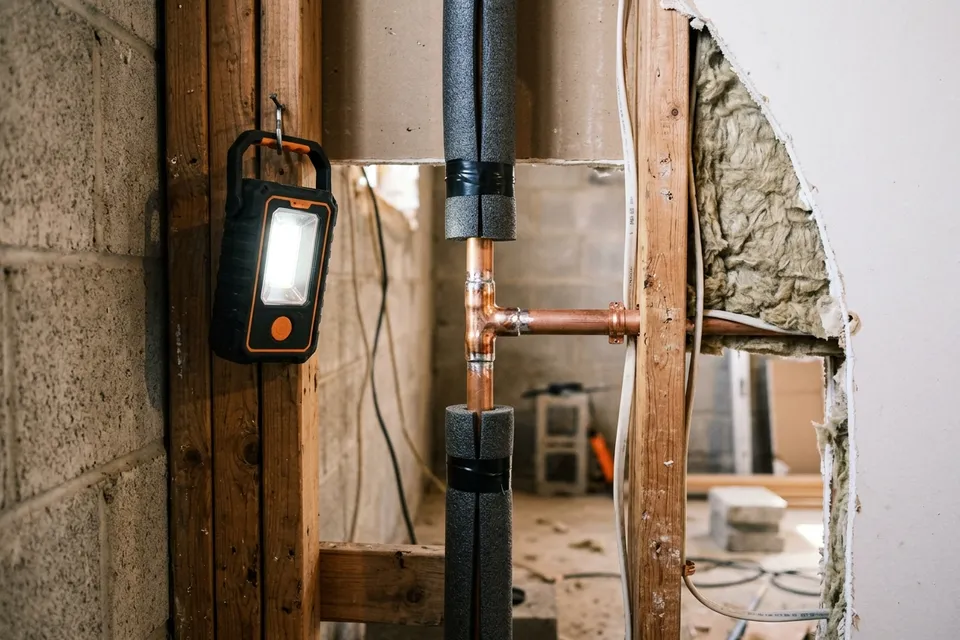
- Fit the new section. Copper is usually joined with soldered fittings or approved press fittings. Where the old pipe is galvanized, we often replace a longer run, because threading new fittings onto rusted galvanized pipe tends to create the next leak.
- Support and insulate the pipe. If it froze, the new section gets insulated, and we talk about whether it can be rerouted away from the cold wall.
Step 4: Test Under Pressure Before Anything Is Closed Up
Once the new section is in, the water is turned back on slowly and the line is brought up to full pressure. We check every new joint, then the rest of the run that was exposed. If the pipe froze, we also run the other fixtures on that line, because a second frozen section can split as it thaws.
Only after the line has held is the wall or ceiling ready to be closed. Drywall and finishing are separate from the plumbing repair, and many homeowners use their own contractor or their insurance company's restoration company for that part.
What Changes the Size and Cost of the Repair
Every burst pipe is different, which is why we give you a clear price after we have seen the pipe and before the work starts. These are the things that move it the most:
- Access. A split on an exposed basement pipe is the simplest case. A pipe inside a finished ceiling, behind tile or under a floor takes more time to reach and more care to open.
- Pipe material and condition. Healthy copper on both sides of a split keeps the repair short. Corroded galvanized or old pipe with several weak spots usually means replacing a longer run.
- How many places froze. A cold exterior wall can freeze a pipe in more than one place. Each split is its own repair.
- The shut-off valve. A seized main valve or a missing fixture shut-off adds a part to the job.
- Timing. We work Monday to Saturday, 7am to 7pm, with same-day appointments available. Our phones are answered 24/7, and after-hours requests are booked for the next day, so shutting off the main valve overnight protects the house until we arrive.
If you are making an insurance claim, we document the damage and the repair, with photos of the failed section, so your adjuster has what they need.
When Burst Pipe Repair Becomes Pipe Replacement
Sometimes a burst is the first visible sign of a bigger problem. If the pipe that failed is galvanized steel, or if it is a lead water service line coming in from the street, a section repair is a short-term fix. Galvanized pipe corrodes from the inside out, so the pipe you cannot see is usually in the same condition as the piece that burst.
In that case we will tell you clearly that the line is due for replacement, explain what is involved, and let you decide. Our water pipe replacement service covers galvanized and lead lines, and our guide to lead pipe replacement cost in Toronto explains how that work is priced. Keep in mind that the City is responsible for the water service pipe from the main to the property line, and the owner is responsible from the property line into the home.
How to Stop It Happening Again
A pipe that froze once will freeze again in the same conditions unless something changes. After a burst pipe repair, we look at:
- Insulating the repaired run and any other pipe on the same exterior wall
- Sealing drafts where cold air reaches the pipe, such as around a rim joist or a dryer vent
- Shutting off and draining outdoor taps each fall, or replacing them with frost-free models through our hose bib and outdoor plumbing service
- Rerouting a pipe away from an exterior wall when it keeps freezing
- A water shut-off and leak detector, such as a Moen Flo smart water shutoff, which can close the main automatically when it detects a leak while you are away
Our winter guide on how to prevent frozen pipes in Toronto has the full checklist.
Book Burst Pipe Repair in Toronto
If a pipe has burst, or you have found a pipe that froze and you are not sure it survived, our licensed and insured team can find the damage, replace the section and test the line. Learn more about our frozen pipe thawing and repair service and our leak detection and repair service, or call (416) 769-8800 to book. We offer same-day appointments Monday to Saturday, 7am to 7pm, across Toronto, from High Park and The Junction to North York, Etobicoke and Scarborough.
Frequently Asked Questions
What should I do first when a pipe bursts? Turn off the main water valve, usually at the front of the basement near the water meter. Then open a cold tap on the lowest floor to drain the pressure out of the lines, keep clear of any water near electrical outlets or lights, and call a licensed plumber.
Can a burst pipe be patched instead of replaced? A clamp or repair tape can hold back water for a short time until a plumber arrives. A proper repair replaces the damaged section with new pipe, because patches are not made to last inside a closed wall.
How long does burst pipe repair take? The plumbing repair on an accessible pipe is usually done in a single visit. Pipes inside finished ceilings or walls take longer to reach, and drying and drywall repair are separate from the plumbing work.
Will my home insurance cover a burst pipe? It depends on your policy and the cause. Many policies treat sudden bursts differently from slow leaks or freezing in an unheated home. We document the damage and the repair with photos so you have what your insurer asks for.
Why did my pipe burst after it thawed? The split usually happens while the pipe is frozen, but the ice holds the water back. You only see the leak once the ice melts and water flows again, which is why a frozen pipe should be thawed carefully with the main valve close at hand.