
Quick Answer: Most hot water radiators in Toronto homes should be repaired, not replaced. A cast iron radiator body usually outlasts the valves, unions and pipe connections around it, so a cold, leaking or noisy radiator is normally fixed at those parts. Replacement makes sense when the radiator body itself is cracked or leaking, when it is the wrong size for the room, or when a renovation calls for a different style of unit.
With the heating season starting, this is the question we hear most from homeowners in older Toronto houses. The answer is usually good news: the expensive part, the radiator itself, is rarely the problem.
Why Most Radiators Can Be Repaired
A cast iron radiator is a simple, heavy piece of metal with no moving parts. Many of the radiators we service in The Annex, Rosedale and Riverdale have been heating the same rooms for generations.
What wears out is everything attached to it:
- Valves that seize, weep at the stem or will no longer shut off
- Unions and pipe connections at the base, which start to drip as their seals age
- Air trapped in the top of the unit, which stops hot water from filling it
- Sediment settled in the bottom of the radiator, which slows circulation
Each of these is a radiator repair job measured in hours, not a replacement.
Common Problems and the Usual Fix
| What you notice | Likely cause | Usual fix |
|---|---|---|
| One radiator stays cold | Trapped air, a seized valve or sediment | Bleed the radiator, free or replace the valve, check circulation |
| Water around the base | Leaking valve, union or pipe connection | Repack or replace the valve, remake the connection |
| Banging or gurgling | Air in the loop or circulation problems | Bleed the system and check the circulator and pressure |
| Boiler pressure keeps dropping | A leak in the loop, a failing feed valve or a waterlogged expansion tank | Pressure test the system and repair the failed part |
| Relief valve dripping | Over-pressure or a failed valve | Diagnose the cause before replacing the valve |
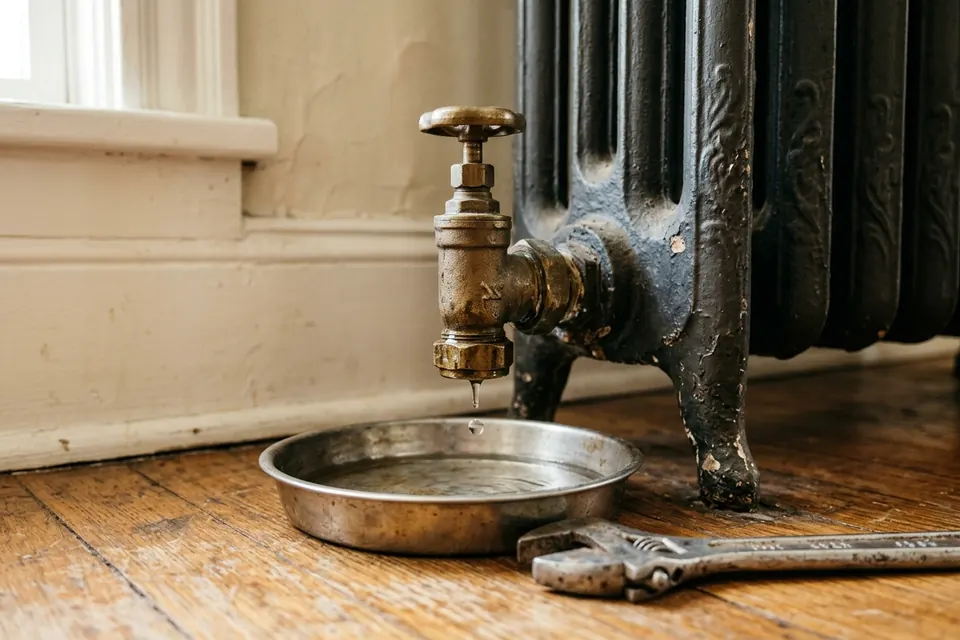
A leaking valve is the most common call we get in October and November. If you find one, put a container under the drip and close the valve only if it turns freely. Forcing a seized valve can turn a slow drip into an open leak.
When Replacing a Radiator Makes Sense
Replacement is the right call in a smaller number of cases:
- The radiator body is cracked or leaking. A leak from the casting itself, rather than from a fitting, generally cannot be repaired reliably.
- The radiator is undersized or oversized for the room. A room that never gets warm, or one that is always too hot, may need a unit sized for its actual heat loss.
- You are renovating. A new layout, a basement finish or an addition often needs a radiator in a new location, or a slimmer panel or baseboard unit that suits the space.
- The unit has been removed or painted over so badly it no longer works. Heavy layers of paint and debris reduce heat output and block bleed valves.
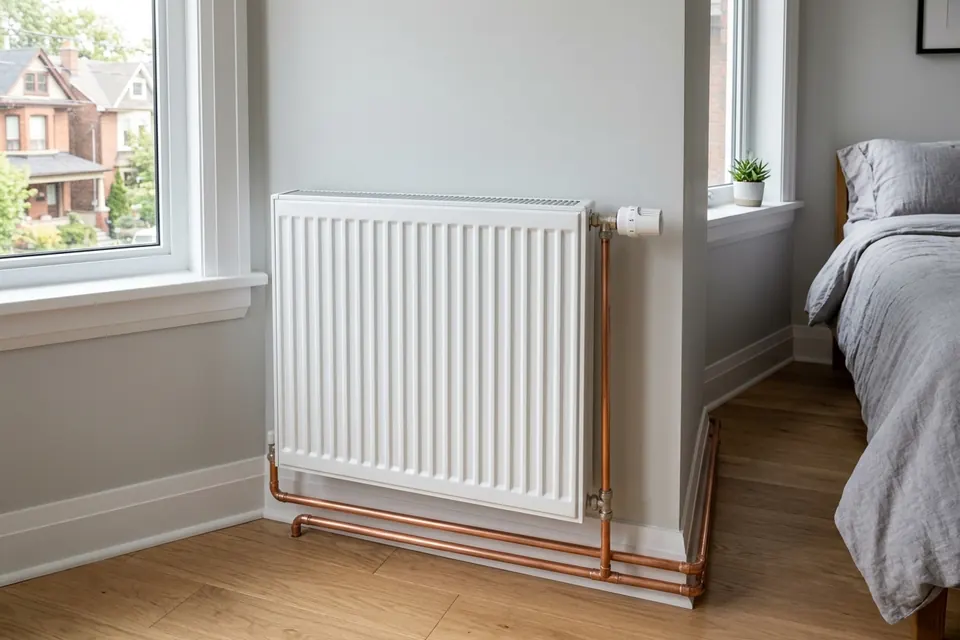
If you are replacing or adding units, it is also the time to think about thermostatic radiator valves for room-by-room control. Set your expectations realistically, though. A 2015 U.S. Department of Energy Building America evaluation of thermostatic radiator valves noted that one earlier study reported heating fuel savings as high as 15%. In its own field test in multifamily buildings, though, it found no measurable savings, and it concluded that the heating system needs to be commissioned and balanced alongside the valves. New valves on an unbalanced system do not fix the system.
What to Expect From a Radiator Service Visit
A typical repair visit follows the same steps:
- Diagnosis. We check system pressure, bleed the affected radiator and test the valve to find the actual cause, rather than topping up the boiler and leaving.
- Repair. Valves, unions and connections are repaired or replaced on the spot in most cases.
- Check the boiler-side plumbing. Feed valve, pressure relief valve and expansion tank, which cause most pressure problems.
- Balance and test. We bring the system back up to pressure and confirm the radiator heats evenly.
We handle the plumbing side of hot water heating. Gas and combustion work on the boiler itself needs a licensed gas technician, and we will tell you clearly when that is what you need.
Plan Before the First Cold Snap
An annual check before the heating season covers bleeding the radiators, inspecting the valves and connections, and confirming system pressure and the expansion tank. Those three things cause most mid-winter failures, and a leak found in October is a much calmer repair than one found on the coldest night in January.
Book a Radiator Repair in Toronto
Advanced Plumbing & Drains has repaired and installed hot water radiators in Toronto homes since 2005, from High Park and Forest Hill to Leaside. If a radiator is cold, leaking or noisy, have it diagnosed before you price out a new one.
See our radiator repair and installation service, or call (416) 769-8800 to book. Same-day appointments are available, and our emergency line is open 24/7 for active leaks and no-heat calls.