Quick Answer: Repair a sewage ejector pump when the motor runs well and a single part has failed, such as a stuck float switch, a worn check valve or an inlet clogged with wipes. Replace it when the motor hums but does not pump, trips the breaker, runs nonstop or is past the usual 7 to 10 year life.
- In Toronto, ejector repairs typically run $300 to $800 and a new installation $1,200 to $2,000, depending on the system. We give you the price before any work starts.
A sewage ejector is the pump that lets a basement bathroom, laundry or kitchenette drain uphill into the main sewer line. When it fails, the toilet or shower below grade stops draining, and what comes back is not clean water. Here is how to tell what is wrong, and whether yours needs a repair or a new pump.
What a Sewage Ejector Does
Most plumbing drains downhill. A basement bathroom often sits below the main sewer line that leaves the house, so its waste has nowhere to fall. The ejector solves that.
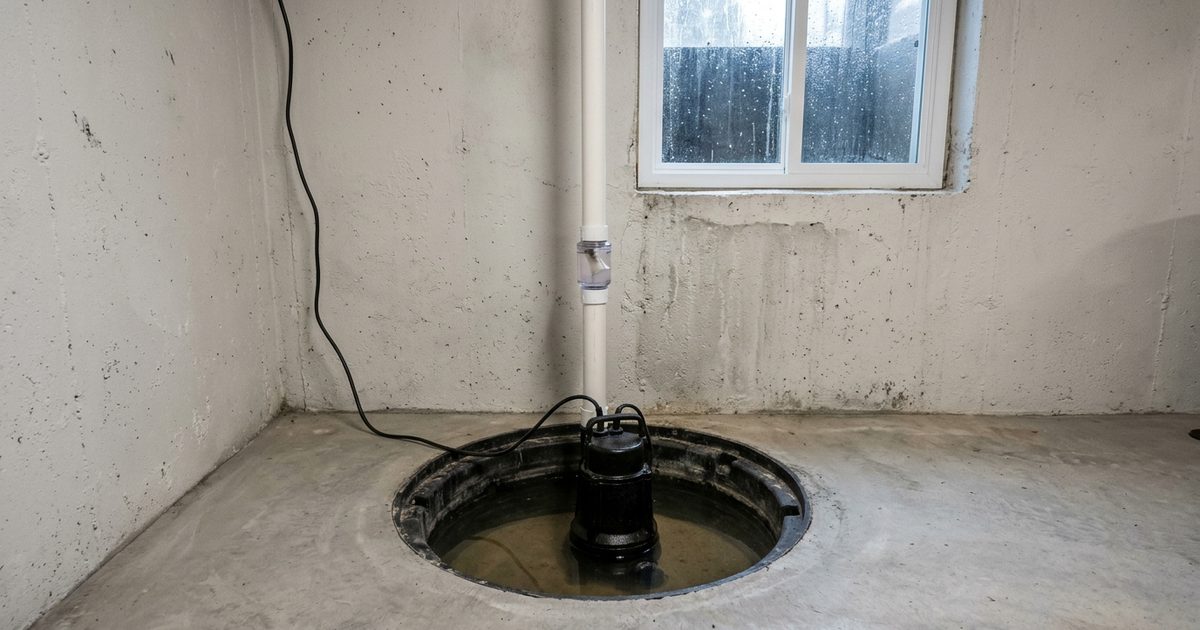
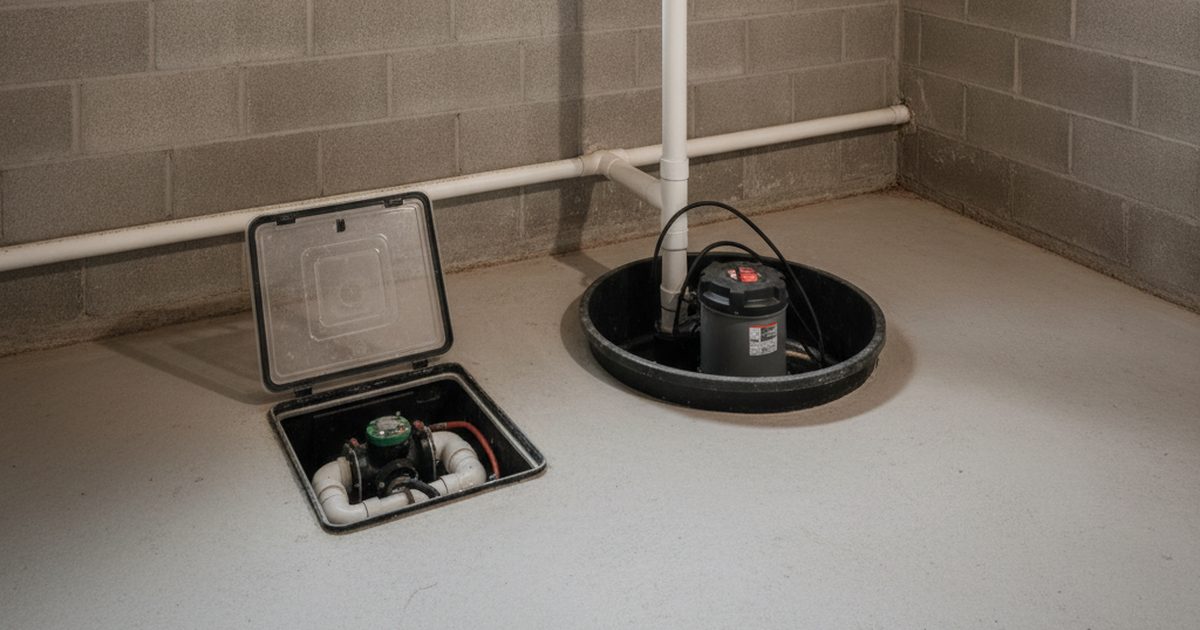
A sewage ejector system is made up of:
- A sealed basin, or pit, set into the basement floor
- The ejector pump inside the basin
- A float switch that starts the pump when the basin fills
- A check valve that stops pumped waste falling back into the basin
- A vent pipe that lets air and sewer gas out through the roof
- The discharge line that carries waste up to the main sewer
Each time the basin fills, the float lifts, the pump runs for a short burst and the basin empties. A healthy system cycles quietly a few times a day, more often if the basement bathroom gets heavy use.
Sewage Ejector or Sump Pump?
They look alike, and they often sit a few feet apart. A sump pump moves clean groundwater from around the foundation. A sewage ejector moves waste water from toilets, showers and sinks. The ejector basin is sealed and vented because of what it holds. The two are not interchangeable, and many Toronto basements need both.
Signs Your Sewage Ejector Is Failing
Call a plumber when you notice any of these:
- Slow or backed-up basement fixtures. The toilet, shower or floor drain on the lower level drains slowly or backs up while upstairs fixtures work fine.
- A sewage smell in the basement. A sealed, vented basin should not smell. An odour points to a failed lid seal, a vent problem or a basin that is not emptying.
- The pump runs nonstop or cycles very often. A stuck float or a check valve that lets waste fall back can keep the pump running long after the basin is empty.
- Humming with no pumping. The motor is trying to start but the impeller is jammed or worn.
- Grinding, rattling or banging. Something solid is caught in the pump, or the bearings are wearing out.
- A tripped breaker. A motor drawing too much current trips the circuit, often right when the bathroom is in use.
- The high-water alarm sounds. If your system has an alarm, it means the basin is filling faster than the pump empties it.
If waste is backing up, stop using the basement fixtures and avoid running water upstairs that drains through the same line until the system is checked.
When a Repair Makes Sense
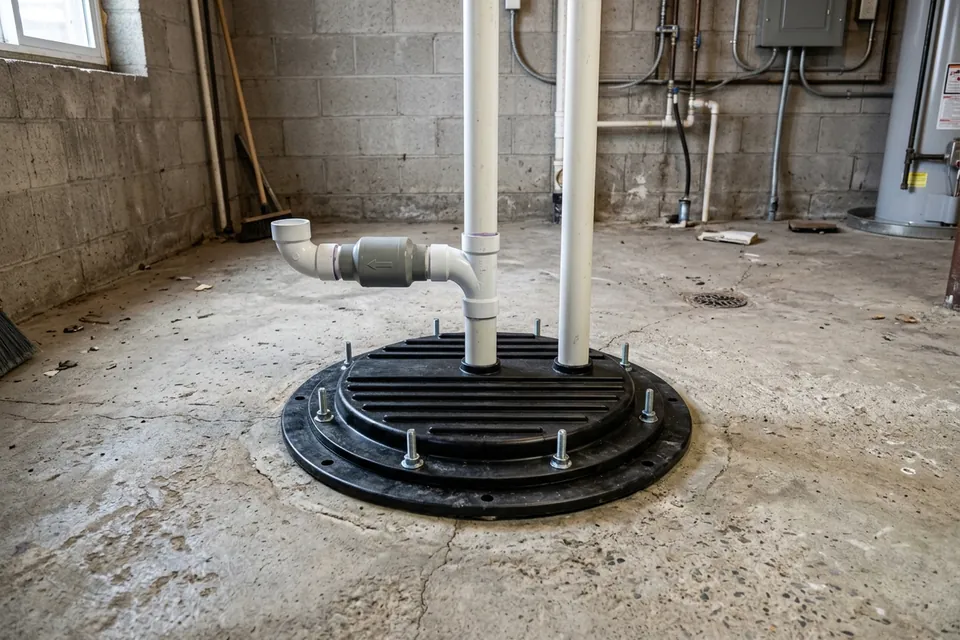
A repair is usually the right call when the pump itself is healthy and a part around it has failed. Good signs for a repair:
- The motor starts and runs smoothly once the float is lifted
- The basin empties at a normal pace once the pump is running
- The fault is a part we can see: a float switch, a check valve, a lid seal or a clogged inlet
- The pump is well inside its expected life
Common repairs we make on Toronto ejector systems:
| Problem | Typical fix |
|---|---|
| Float switch stuck or tangled | Free or replace the float switch |
| Pump runs too often | Replace the worn check valve |
| Sewer smell in the basement | Reseal the basin lid, check the vent |
| Pump jammed or humming | Clear wipes or debris from the impeller and inlet |
| Breaker trips | Test the motor and wiring, repair or replace as needed |
Repairs typically take 2 to 3 hours and run $300 to $800, depending on what has failed. We test the system with water before we leave so you can see it cycle properly.
The Wipes Problem
The most common cause of a jammed ejector we see is not age. It is wipes. Baby wipes, cleaning wipes and "flushable" wipes wrap around the impeller and block the inlet. The City of Toronto's guide to what not to flush is clear on this: wipes of any kind, "even those labelled 'flushable' and 'biodegradable'", belong in the garbage, because the wrong items can "clog or damage pipes in your home". A basement bathroom on an ejector is the place that rule matters most.
When to Replace the Pump
Replacement is the better choice when the problem is the pump itself:
- The motor hums but will not pump, even after the impeller is cleared
- It overheats or trips the breaker again after a repair
- It is 7 to 10 years old or more. With proper care, that is the typical life of a sewage ejector, and an old pump that has started to fail rarely gets better
- It cannot keep up. A pump sized for a half bath may struggle after a full bathroom, laundry or bar sink is added downstairs
- Repairs keep coming back. A second or third call in a short time usually costs more than a new pump
When we replace an ejector, we check the whole system along with the pump: the check valve, the basin and lid seal, the vent connection and the discharge line, so the new pump is not let down by a tired part next to it.
What Ejector Replacement Involves
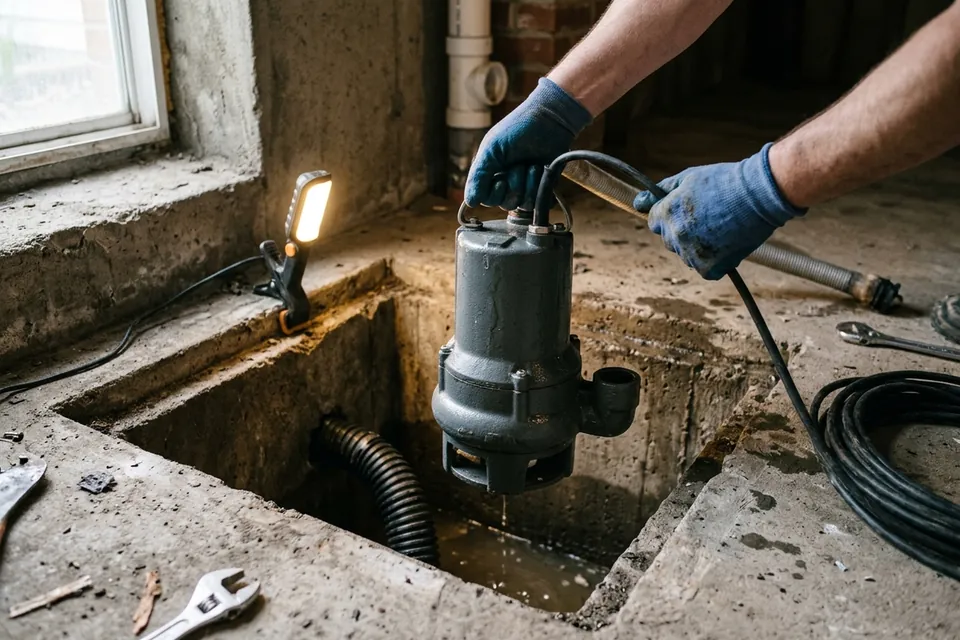
A typical replacement on a service call goes like this:
- Assess. We check how the basement fixtures drain, test the old pump and look at the basin, vent and discharge line.
- Size the pump. We match the new ejector to the fixtures it serves and how far it has to lift the waste.
- Shut down and empty. The power is turned off and the basin is pumped out safely.
- Swap the pump. The old pump comes out and the new one goes in, with a new check valve where needed.
- Seal and vent. The lid is resealed so the basin stays airtight, and the vent connection is checked.
- Test. We run water through the basement fixtures and watch the pump cycle.
Most replacements are finished the same day. A brand new system, for example when you are adding a basement bathroom, takes about 3 to 5 hours and runs $1,200 to $2,000 depending on how complex it is. If you are planning a new basement bathroom, our plumbing installation team lays out the drains and the ejector together.
What It Costs in Toronto
These are the typical ranges for our work in Toronto homes:
| Job | Typical cost |
|---|---|
| Sewage ejector repair | $300 to $800 |
| New sewage ejector installation | $1,200 to $2,000 |
| Yearly check and cleaning | $150 to $300 |
What moves the price:
- The part that failed. A float switch costs less than a new pump.
- Access. A basin under a finished floor or behind a built-in cabinet takes longer to reach.
- What the pump serves. A full bathroom and laundry need a larger pump than a single toilet.
- Discharge and venting. Older installs sometimes need a new check valve, a fixed vent or a reworked discharge line.
We give you the price before any work starts, and we will tell you clearly when a repair is the better value and when it isn't.
How to Make Your Ejector Last
A few habits add years to an ejector pump:
- Keep wipes, paper towels, dental floss and hygiene products out of the basement toilet
- Keep grease out of any basement kitchen sink
- Listen for changes: a pump that runs longer or sounds different is telling you something
- Have the system checked and cleaned once a year
- Know where the pump's breaker or plug is, so it can be shut off if it runs nonstop
A yearly service lets us clean the basin, test the float and check valve and catch a worn part before it causes a backup.
Sewage Ejector Repair and Replacement in Toronto
If your basement bathroom runs on an ejector that has not been serviced in years, and it has started to drain slowly, make noise or smell, it is worth a look before it fails with the bathroom in use.
Our licensed and insured plumbers repair and replace sewage ejectors across Toronto, including Etobicoke, North York, East York, Scarborough and High Park, with same-day appointments Monday to Saturday, 7am to 7pm.
Learn more about our sewage ejector repair and installation service, or call (416) 769-8800 to book.
Frequently Asked Questions
How long does a sewage ejector pump last?
With proper care, a sewage ejector typically lasts 7 to 10 years. Heavy use, wipes in the system and skipped maintenance shorten that.
Can I still use the basement bathroom if the ejector stops working?
No. Without the pump, waste has nowhere to go and will back up into the basement fixtures. Stop using them, and limit water use upstairs if it drains through the same line, until the system is repaired.
Why does my basement smell like sewage near the ejector?
The basin is meant to be sealed and vented. A smell usually means the lid seal has failed, the vent is blocked or disconnected, or the basin is not emptying. All three are repairable.
Do I need a sewage ejector for a basement bathroom?
You need one if the bathroom sits below the main sewer line that leaves your house, because the waste cannot drain down to it. We check the depth of your sewer line before planning the bathroom.
Is a sewage ejector the same as a backwater valve?
No. An ejector pumps waste up and out of the basement. A backwater valve stops City sewage from flowing back into your basement when the sewer overloads in a storm. They solve different problems, and some homes need both.