Quick Answer: Most Toronto homes do well with a professional main drain cleaning once a year, and every 6 to 12 months if the drain has already had a root or grease blockage. Kitchen, bathroom and laundry drains don't need a set schedule: keep grease and wipes out of them, and call a plumber when one slows down or two start backing up at once.
A drain that is cleaned on a schedule is cleaned on your terms, on a weekday, before anything backs up. A drain that is only cleaned when it blocks gets cleaned on its terms, often with water on the basement floor. Here is how often each drain in your house needs attention, and how to tell when yours is due.
How Often Should the Main Drain Be Cleaned?
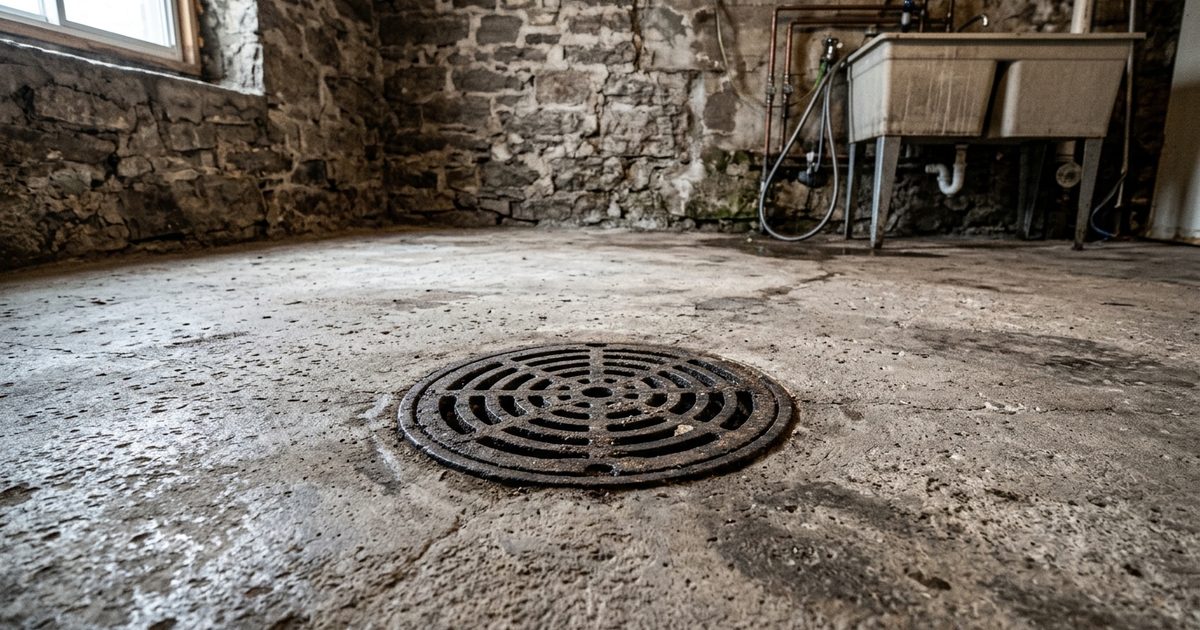
For most houses, once a year is the right starting point for the main drain, the large pipe that carries everything from the house out to the city sewer. That is the drain that causes basement backups, and it is the one you cannot reach yourself.
Shorten that to every 6 to 12 months if any of these apply:
- you have had a main drain backup before, especially one caused by roots
- there are large trees near the front of the house or over the drain line
- the drain under the basement floor is original clay or cast iron
- the house has a basement apartment or more people than it was built for
- a camera inspection has shown a sag, an offset joint or a rough section where debris catches
If the house is newer, the drain is plastic and it has never given you trouble, you can stretch the interval and book a cleaning when you notice the warning signs below. There is no single rule for every house. The history of your own drain is the best guide.
Why Older Toronto Homes Need It More Often
A lot of Toronto's housing stock, in neighbourhoods like The Annex, Leaside, Riverdale and The Junction, still drains through the clay or cast iron pipe it was built with. Those pipes behave differently from modern plastic:
- Clay pipe comes in short sections with a joint every few feet. Over the decades the joints shift, and roots find their way in. The City of Toronto puts it plainly: "Roots from nearby trees can grow into the sewer pipe and cause holes and blockages."
- Cast iron rusts from the inside. The inner wall turns rough and scaly, and grease, paper and hair snag on it and build up much faster than they would in a smooth pipe.
Roots in particular grow back. Cleaning cuts them out of the pipe, but the tree is still there, so a drain with roots in it usually needs cleaning on a schedule until the damaged section is repaired or replaced.
It also helps to know who owns what. The City says the part of the sewer it owns "runs from the sewermain on the street to the property line", and your part "runs from the property line into the home". Keeping your section clear is up to you. You can read more on the City's blocked or backed-up basement drain page.
Kitchen, Bathroom and Laundry Drains
Branch drains don't need cleaning on a calendar. They need the right habits, and a plumber when those habits are not enough.
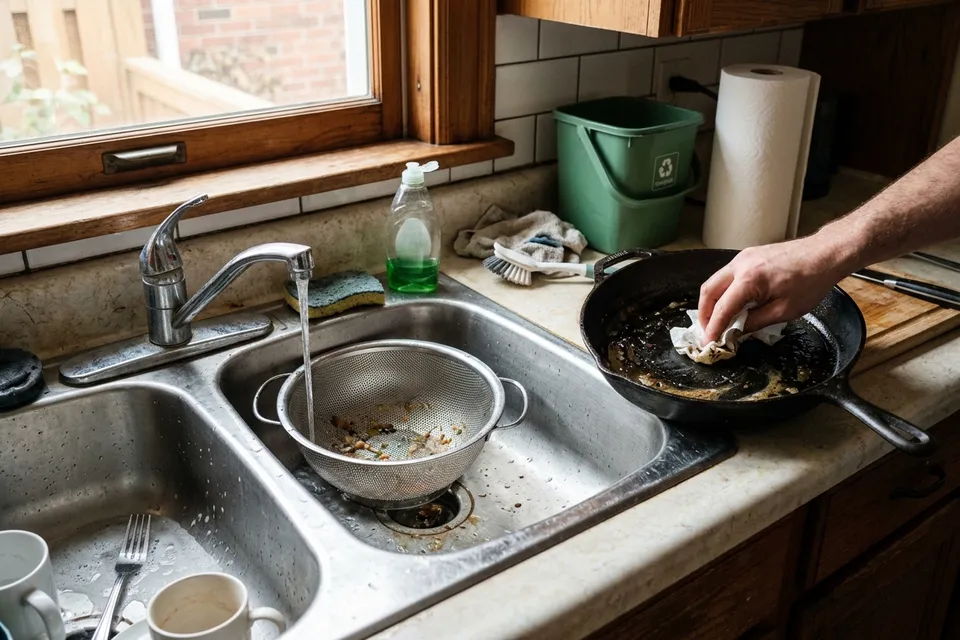
Kitchen sink. Grease is the main problem here. The City of Toronto's guide to what not to pour down the drain explains that "Fats, oils and grease can cool, harden and stick to the inside pipes. Over time, they build up and cause blockages in private plumbing and City sewer pipes." Wipe pans with a paper towel before washing them, put cooled grease in the Green Bin, and use a strainer in the sink.
Bathroom sinks, tubs and showers. Hair and soap are the usual cause. A hair catcher in the tub and shower does more than any drain product. If a bathroom drain slows down, pull and clean the stopper first.
Toilets. Only toilet paper. The City notes that products labelled "flushable" or "biodegradable" "do not dissolve", and wipes are one of the most common things we pull out of main drains.
Laundry. Lint from washing machines builds up in the laundry tub drain and the floor drain it empties into. A lint trap on the washer discharge hose is cheap and saves a lot of trouble.
Skip chemical drain cleaners. They rarely clear a real blockage, they are hard on older pipes, and they make the job more dangerous for whoever has to open the drain afterwards.
Signs Your Drains Are Due for a Cleaning
Book a cleaning, whatever the calendar says, if you notice:
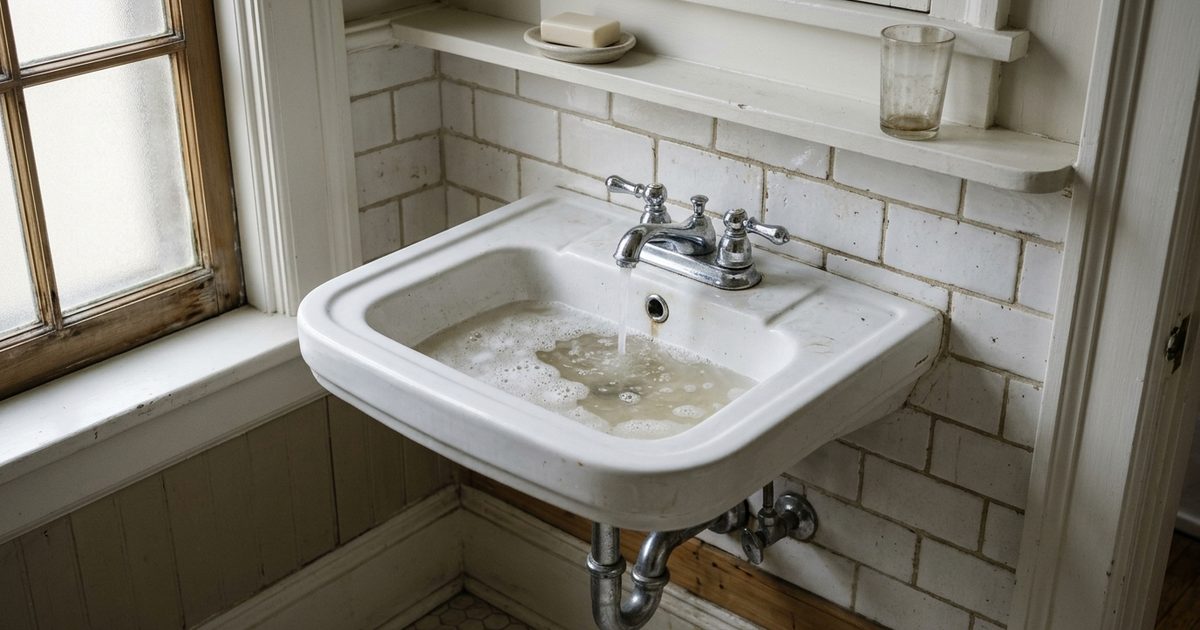
- more than one fixture draining slowly at the same time
- gurgling from a sink, tub or toilet when another fixture drains
- water coming up through the basement floor drain when the washing machine empties
- a sewer smell from the floor drain that refilling the trap does not fix
- a toilet that clogs more often than it used to
- the same drain blocking again within a few months of being cleared
Several fixtures slowing down together, or water at the floor drain, points to the main drain. That is the one to deal with quickly, because the next step is usually a backup. Our guide on a slow-draining sink versus a main drain clog explains how to tell the two apart.
What a Professional Drain Cleaning Involves
We start by asking about the drain's history and what you have noticed, then pick the method that suits the pipe:
- Drain snaking, with a cable machine run through the cleanout, cuts through blockages and roots and opens the line. It is the standard first step for most main drains. See our drain snaking service.
- Hydro jetting uses high-pressure water to scour grease, scale and root debris off the inside wall of the pipe, not just punch a hole through it. It is the better choice for drains that keep coming back with grease or scale. See our hydro jetting service.
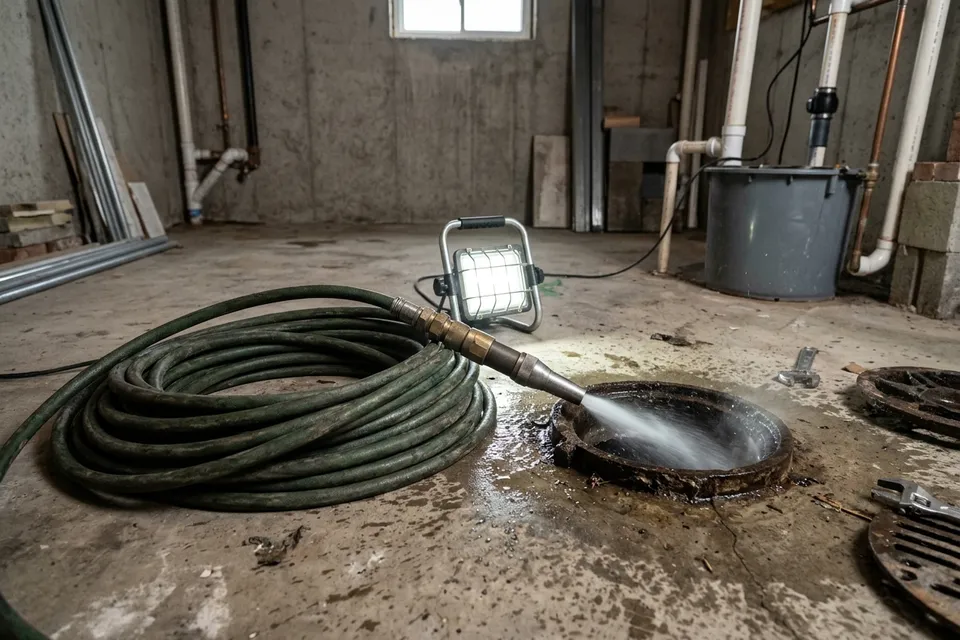
After cleaning, we run water through the line to confirm it is flowing. If the drain has blocked more than once, or we bring back roots or pieces of pipe, we recommend a sewer camera inspection so you can see the condition of the pipe on screen and decide what to do next.
You get the options and the price before any work starts. For typical price ranges and what changes them, see our drain cleaning cost guide.
When Cleaning Is No Longer Enough
Regular cleaning keeps a sound drain flowing and buys time on an ageing one. It does not fix a pipe that is broken. If you are booking cleanings more than twice a year, or the camera shows a collapsed section, a large root mass at a broken joint or cast iron that has rusted through, repeated cleaning is costing you money without solving anything.
At that point the conversation moves to drain repair for a single damaged section, or drain replacement for a line that is failing along its length. On many Toronto lots, trenchless drain replacement can replace the line without digging a trench across the front yard. We will tell you clearly when cleaning still makes sense and when it doesn't.
Book a Drain Cleaning in Toronto
If your main drain has not been cleaned in the last year, or you are seeing any of the warning signs above, it is worth booking before the next backup. Our licensed and insured team cleans drains across Toronto, including High Park, Bloor West Village, Etobicoke, North York and East York, with same-day appointments Monday to Saturday, 7am to 7pm.
Learn more about our drain cleaning service in Toronto, or call (416) 769-8800 to book.
Frequently Asked Questions
How often should I clean my main drain if I have tree roots? Every 6 to 12 months is typical once roots have been found in the line. Roots grow back after cleaning, so a set schedule keeps them from closing the pipe. If cleanings are needed more often than that, have the line inspected with a camera and look at repairing the damaged section.
Do I need drain cleaning if nothing is blocked? For an older house with a clay or cast iron main drain, yes, a yearly cleaning is cheaper and easier than a basement backup. For a newer home with plastic drains and no history of trouble, you can wait for the warning signs.
Can I clean my own drains? You can keep branch drains clear with a strainer, a hair catcher and by keeping grease, wipes and lint out of them, and a plunger or a small hand auger can clear a simple sink clog. The main drain needs a proper drain machine and someone who knows how to use it on older pipe.
What is the difference between drain snaking and hydro jetting? Snaking uses a rotating cable to cut through a blockage and open the drain. Hydro jetting uses high-pressure water to clean the whole inside wall of the pipe. Snaking is usually the first step. Jetting suits drains that keep blocking with grease or scale.
Do you offer yearly drain cleaning? Yes. We offer annual drain cleaning maintenance for Toronto homes. Call (416) 769-8800 and we can set it up.