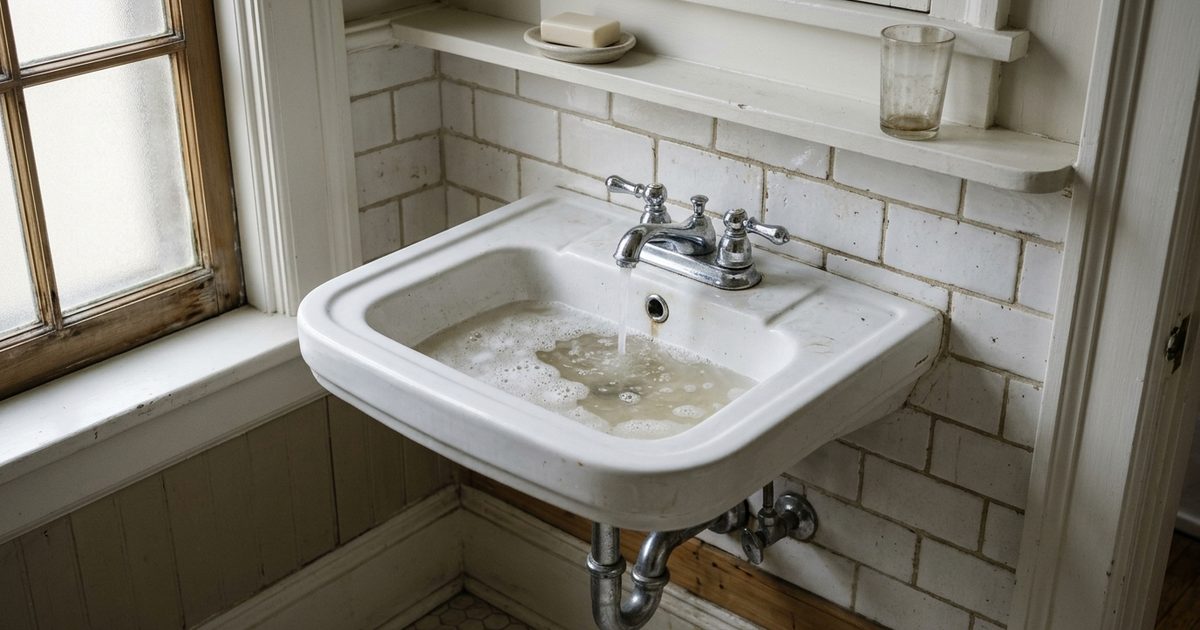
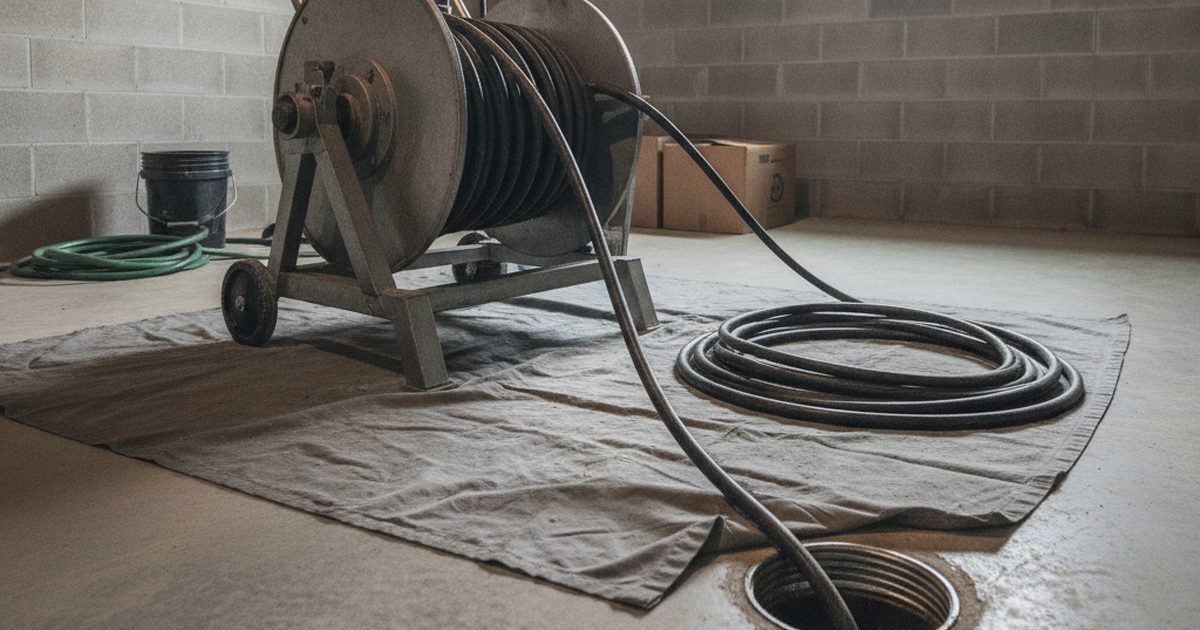
Quick Answer: A sewer smell in the house usually comes from a drain trap that has dried out, a missing cleanout plug in the floor drain, a failed seal under a toilet, a blocked plumbing vent, or a cracked or broken drain line. Start by pouring water into floor drains and any sink or tub you rarely use. If the smell comes back within days, call a plumber to trace it. A sewer camera inspection shows whether the drain line itself is the source.
Sewer gas has a smell most people recognise: rotten eggs, or something like an open manhole. It is unpleasant, and it is also a sign that something in your drain system is not sealed the way it should be. Here is how to find the cause, what you can check yourself, and when to call us.
First: Make Sure It Is Not a Gas Leak
Natural gas has an added odour that also smells like rotten eggs. If you have a gas furnace, water heater or stove and the smell is strong, sudden or near a gas appliance, do not hunt for the cause. Leave the house and call your gas utility or 911 from outside.
If the smell is near a drain, comes and goes, or is worse in the basement after a dry spell, it is far more likely to be sewer gas. The rest of this guide is about that.
How Your Drains Keep Sewer Gas Out
Every drain in your house connects to the sewer, and the sewer is full of gas. What stops that gas from coming up into the house is a small pool of water sitting in each drain's trap, the U-shaped bend under a sink or below a floor drain.
The City of Toronto explains it on its managing water around the house page: the pipe connected to your basement floor drain has a P-trap that retains water, and "this helps create a barrier, which prevents sewer odours from entering your home." Vent pipes that run up through the roof let the system breathe, so draining water does not suck those traps empty.
When a trap loses its water, a seal fails, or a pipe breaks, that barrier is gone. That is where the smell comes from.
Common Causes of a Sewer Smell in the House
A dry floor drain or unused fixture
This is the most common cause we find, and the easiest fix. A basement floor drain that never sees water slowly evaporates its trap dry, especially with the furnace running in winter. The same happens with a guest bathroom shower or a basement sink nobody uses.
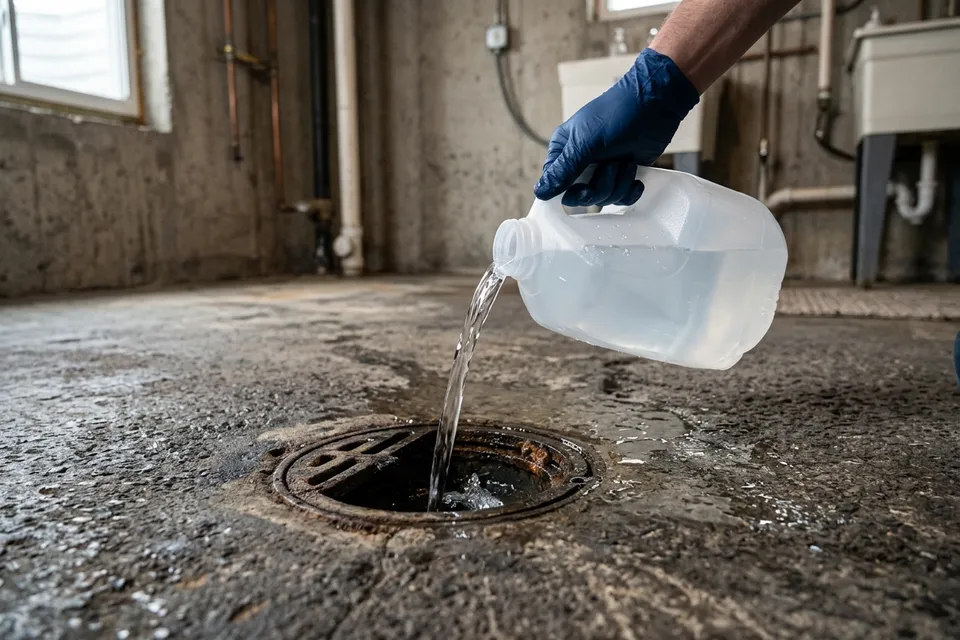
The City's advice is simple: if you smell an odour in your basement, check the floor drains, and if they are dry, pour in a few litres of clean water. Doing laundry or running the basement sink can also top up the trap.
A missing or loose cleanout plug
Many floor drains in older Toronto homes have a cleanout opening inside the drain, closed with a plug or cap. If that plug was left off after a drain cleaning, or has cracked, sewer gas bypasses the trap completely. Refilling the trap will not help, because the gas is coming through the open cleanout.
A failed toilet seal
The wax ring under a toilet seals the toilet to the drain. If it fails, or the toilet has worked loose, you may smell sewer gas around the base of the toilet, sometimes with a little water on the floor after flushing. Resetting the toilet on a new seal fixes it. Our guide to toilet repair or replacement covers this repair.
A blocked or poorly connected vent
If a roof vent is blocked by a bird's nest, debris or ice in a hard freeze, or a vent was never connected properly during a renovation, draining water can pull the water out of nearby traps. Signs include gurgling sinks or tubs, and a smell that shows up right after a toilet flush or the washing machine drains. The City lists a blocked roof vent stack and improper internal venting among the plumbing defects it finds during its sanitary sewer smoke testing.
A cracked or broken drain line
This is the cause that needs a plumber to confirm. In many older Toronto houses, from Cabbagetown and Riverdale to Bloor West Village and Swansea, the drain under the basement floor is original clay or cast iron. Cast iron rusts through from the inside, clay joints shift and let roots in, and a crack can let sewer gas into the soil under the slab or inside a wall. The smell is usually constant, does not go away when the traps are full, and is often worse in one part of the basement.
When to Call a Plumber
Pour water into every floor drain and unused fixture, and check that the cleanout plug in the floor drain is in place. If the smell is gone and stays gone, that was it.
Call a plumber if:
- the smell comes back within a few days after refilling the traps
- you smell it near a toilet, or there is water at the base after flushing
- drains gurgle, or the smell appears when other fixtures drain
- the smell is strongest in one area of the basement, or inside a wall
- you also have slow drains, or water coming up the floor drain
When we trace a sewer smell, we check every trap, the cleanout, the toilet seals and the visible drain and vent connections first. If those are all sound, the next step is to look inside the drain line itself.
How a Sewer Camera Inspection Finds the Source
A sewer camera inspection puts a small waterproof camera into your drain through the floor drain or a cleanout, and we watch the inside of the pipe on a screen as it travels toward the city sewer. It shows cracks, broken or separated joints, root intrusion, sags where waste sits in the line, and rust-through on cast iron pipe, and it tells us how far along the line each problem sits.
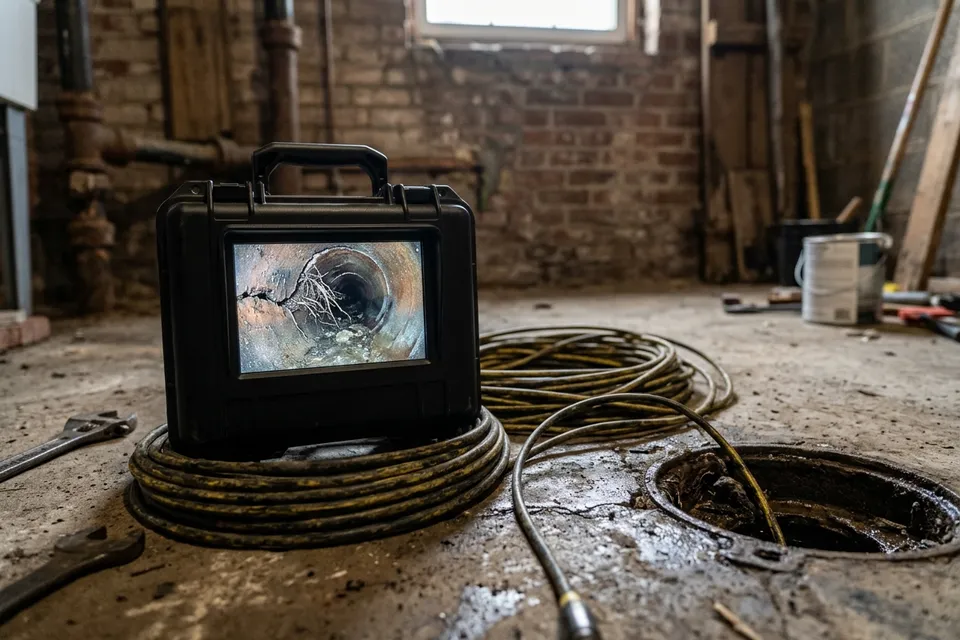
That matters because it turns a guess into a plan. A single cracked section near the house can often be repaired. A line that is broken in several places, full of roots or collapsing is a candidate for drain replacement, and in many Toronto yards that can be done with trenchless drain replacement instead of digging up the whole lawn. If the line is in good shape, the camera rules it out, and we look elsewhere for the source.
We show you what the camera found and tell you clearly what it means, with the options and the price before any work starts.
Book a Sewer Smell Inspection in Toronto
A sewer smell that keeps coming back is worth tracking down. Sewer gas is unpleasant to live with, and when the cause is a broken drain line, the same crack that lets the smell in can let roots in and lead to backups.
Our licensed and insured team traces sewer smells and runs camera inspections across Toronto, including The Annex, High Park, Etobicoke, York and Scarborough. We offer same-day appointments Monday to Saturday, 7am to 7pm. Learn more about our sewer camera inspection service, or call (416) 769-8800 to book.
Frequently Asked Questions
Why does my basement smell like sewer only sometimes? A smell that comes and goes is often a trap that dries out between uses, or a vent problem that pulls water out of a trap when other fixtures drain. Refill the floor drain first. If it keeps happening, have the vent and the floor drain cleanout checked.
Is sewer gas dangerous? At the levels found from a dry trap in a house, sewer gas is mainly an odour problem, but it should not be ignored, and a strong rotten-egg smell near a gas appliance should always be treated as a possible gas leak. Fix the source rather than masking it with air fresheners.
Can a sewer camera find the source of a smell? A camera shows the inside of the drain line: cracks, broken joints, roots and rust-through that can let sewer gas out. It cannot see a dry trap or a vent on the roof, so we check those first and use the camera to confirm or rule out the drain line.
Why does my bathroom smell like sewer after a shower? Often the shower or tub trap is not holding water, a vent problem is pulling water out of the trap, or the toilet seal nearby has failed. Warm, humid air can also make an existing smell more noticeable. A plumber can test each one.