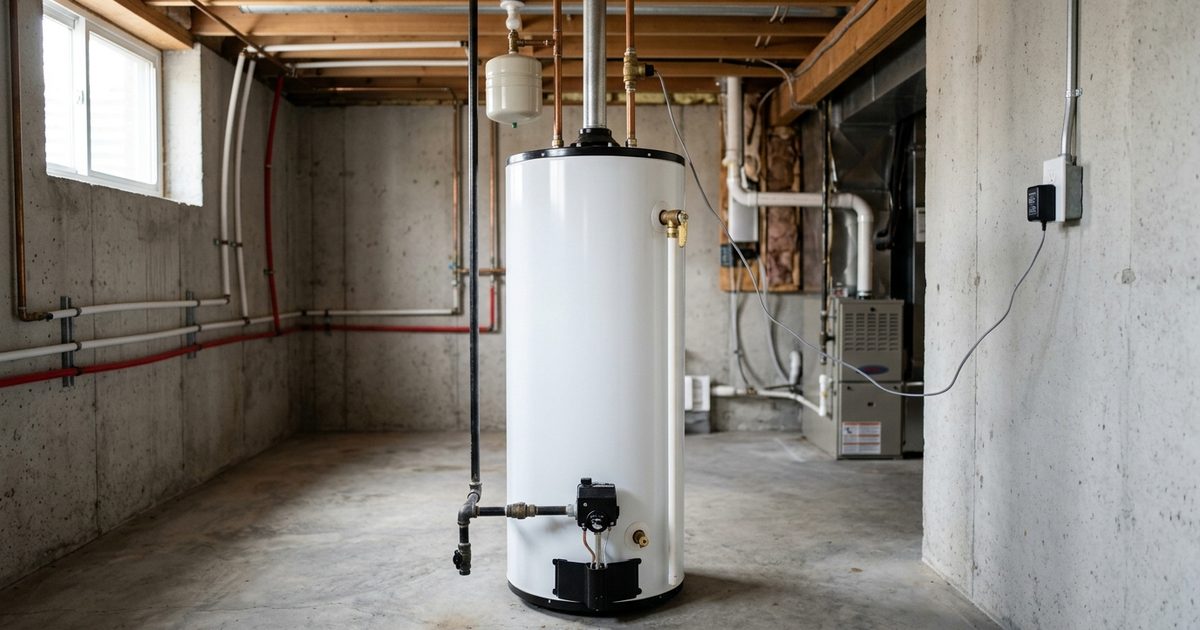
Quick Answer: A water heater expansion tank needs replacing when it can no longer absorb the extra volume of water created as the tank heats. The clearest signs are a temperature and pressure relief valve that drips or discharges, a tank that sounds solid when you tap the top half, and water (not air) coming out of the tank's air valve. Replacement is a short job: the new tank is set to your home's water pressure before it goes on.
The expansion tank is the small tank, usually grey or blue, that sits on the cold water pipe above or beside your water heater. Most homeowners never look at it until something starts dripping in the basement.
What a Water Heater Expansion Tank Does
Water takes up more space when it is heated. In a tank-style water heater that happens every time the burner or element comes on.
In an open system, that extra water simply pushes back into the City main. But if your incoming line has a pressure reducing valve, a check valve or a backflow preventer, the water has nowhere to go. The pressure inside your plumbing climbs with every heating cycle, then drops again as you use hot water.
An expansion tank gives that water somewhere to go. Inside the steel shell is a rubber bladder or diaphragm with pressurized air on one side. Amtrol, a major maker of these tanks, explains in its Therm-X-Trol installation and operation instructions that the tank goes on the supply line between the water heater and the backflow preventer, check valve or pressure reducing valve, and that its air charge absorbs the pressure increase, "keeping system pressures below the relief valve setting."
That last part is the point. When the tank stops working, the relief valve on your water heater becomes the only thing letting pressure out.
Signs Your Expansion Tank Has Failed
An expansion tank rarely fails all at once. These are the signs we see most often in Toronto basements.
- The relief valve drips or discharges. The temperature and pressure (T&P) relief valve is the brass valve on the side or top of the water heater, with a pipe running down toward the floor. Water at the end of that pipe, or a damp patch below it, often means pressure is spiking during heating cycles.
- The tank sounds solid all the way up. Tap the tank with your knuckle. The top half should sound hollow, because it is full of air. If it sounds the same top to bottom, the tank is probably waterlogged.
- Water comes out of the air valve. The valve stem on the tank looks like a tire valve. A quick press should let out a short hiss of air. Water means the bladder inside has failed.
- Pressure swings at the taps. Strong pressure right after the heater runs, then normal again, can point to pressure building with nowhere to go.
- Rust or leaks on the tank itself. Corrosion around the fitting or seams means the tank is at the end of its life, whatever it sounds like.
- A water heater that wears out early. Repeated pressure spikes put strain on the tank, the fittings and the relief valve.
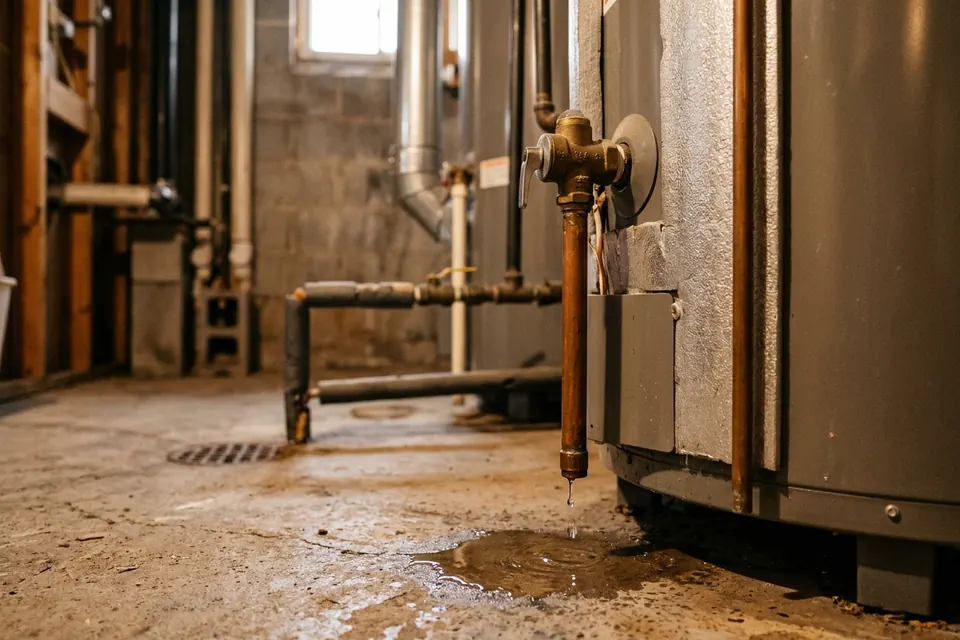
A dripping relief valve is never something to plug or cap. That valve is a safety device. If it is discharging, call a licensed plumber to find out why.
How to Check an Expansion Tank Safely
There are two checks you can do yourself without opening anything up.
- The tap test. With the water heater running normally, tap the expansion tank from top to bottom. A hollow sound at the top is normal. A dull, solid sound everywhere suggests the tank has filled with water.
- The air valve test. Remove the plastic cap on the valve stem and press the pin very briefly. Air is good. Water means the bladder has failed and the tank needs replacing.
Checking the actual air pressure is a different job. Amtrol's instructions say the air charge should be set to match the cold water supply pressure with the tank empty of water, so a gauge reading taken while the tank is full of system water does not tell you much. Getting an accurate reading means isolating the tank and relieving the water side first.
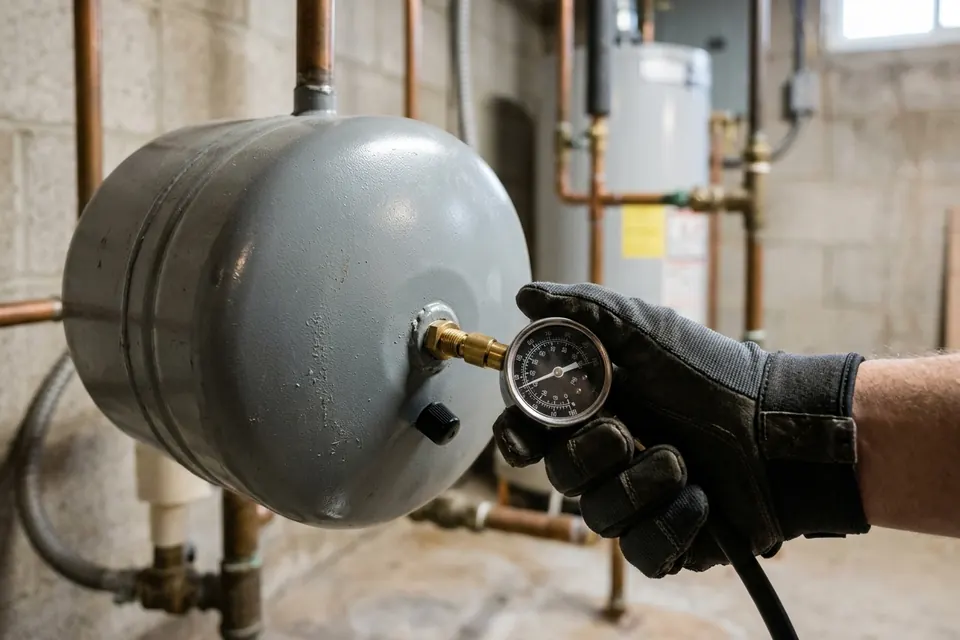
Amtrol's maintenance note recommends that a licensed professional check the complete system, including the expansion tank, every year, and more often as the system ages. Its warnings also call for the T&P relief valve to be inspected at least once every three years, or whenever discharge is present. If your water heater hasn't had either in a while, a water heater check covers both.
Expansion Tank Replacement: What the Job Involves
Replacing a water heater expansion tank is usually a short visit. Here is what happens.
- Confirm the tank is the problem. A dripping relief valve can also mean the valve itself is worn or the water temperature is set too high. We test before we replace anything.
- Measure your water pressure. The new tank's air charge has to match your home's incoming pressure. In homes with high street pressure, we also look at whether a pressure reducing valve is in place and working.
- Shut off the water and relieve pressure. The water heater is turned down and the cold supply is closed so the old tank can come off without a flood.
- Set the new tank's pre-charge. This is done before the tank is installed, with the tank empty, as the manufacturer's instructions require.
- Install and support the tank. The new tank goes on the cold supply line between the water heater and the check valve, backflow preventer or pressure reducing valve. A full tank of water is heavy, so it needs to be properly supported, not hanging off a thin copper line.
- Test. Water is turned back on, the heater runs through a cycle, and we check the joints, the pressure and the relief valve.
Sizing matters. A tank that is too small for the water heater and your supply pressure will fill up and stop doing its job. The right size depends on the water heater's capacity and the pressure coming into the house, so it should be chosen on site rather than off a store shelf.
Is This a DIY Job?
It looks simple, but we don't recommend it. Amtrol states plainly in its instructions that the product "must be installed by a licensed professional." The work involves shutting down a water heater, relieving a pressurized system, setting the air charge correctly and testing a safety valve. Getting the pre-charge wrong can damage the bladder of a brand new tank.
There is also the question of what caused the failure. If an expansion tank fails early, it can be a sign of very high incoming pressure. A licensed plumber can check that while they are there.
Water Heater Expansion Tank vs Boiler Expansion Tank
Many older Toronto homes in neighbourhoods like The Annex, Leaside and Riverdale have both a water heater and a hot water boiler for the radiators. Both systems can have an expansion tank, and they are not interchangeable.
- A water heater expansion tank is built for drinking water and sits on the cold supply to the water heater.
- A boiler expansion tank sits on the closed heating loop that feeds your radiators. It deals with the same physics but at different pressures, and boiler tanks are not meant for drinking water.
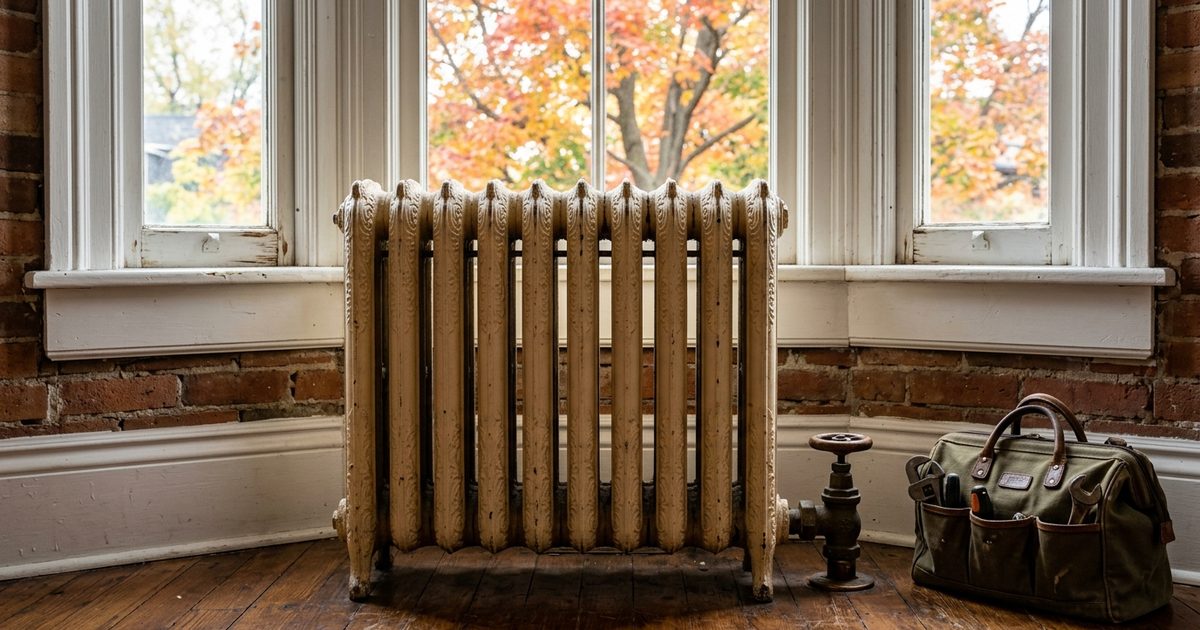
If your radiators are losing pressure, the boiler relief valve is discharging, or the heating system keeps needing to be topped up, that is a heating loop issue. Our radiator repair service covers boiler expansion tanks, feed valves and relief valves.
When the Water Heater Itself Is the Problem
Sometimes a failed expansion tank is the last straw for an old water heater. If the tank is leaking from the bottom, the hot water is rusty, or the heater is well into its second decade, it may make more sense to replace the water heater and install a properly sized expansion tank at the same time.
We look at the age and condition of the heater, the relief valve, the anode rod and your water pressure, then tell you clearly whether a repair or a replacement makes sense. If you'd rather keep the tank you have going longer, our guide to powered vs magnesium anode rods explains the other part that decides how long a tank lasts.
Book an Expansion Tank Check in Toronto
If your relief valve is dripping, your expansion tank sounds solid, or you can't remember the last time anyone looked at your water heater, our licensed team can check it. We offer same-day appointments Monday to Saturday, 7am to 7pm, and our phones are answered 24/7, with after-hours calls booked for the next day.
Learn more about our water heater repair and replacement service, or call (416) 769-8800 to book. We work across Toronto, from High Park and The Junction to North York and Etobicoke.
Frequently Asked Questions
Does every water heater need an expansion tank? A water heater needs one when the plumbing is a closed system, meaning there is a check valve, backflow preventer or pressure reducing valve on the incoming line. Without one of those, the expanded water can flow back into the main. A plumber can tell you which kind of system you have.
Why is my water heater relief valve dripping? The most common causes are pressure building during heating because the expansion tank has failed or is missing, a worn relief valve, or water temperature set too high. It should be checked by a licensed plumber rather than capped or ignored.
How do I know if my expansion tank is waterlogged? Tap it. A healthy tank sounds hollow at the top. A waterlogged tank sounds solid all the way up, and pressing the air valve may release water instead of air.
Can an expansion tank be repaired? Some larger models have replaceable bladders, but the small tanks on most home water heaters are replaced as a unit.